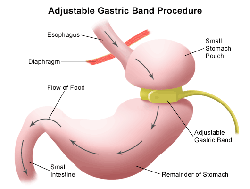
Virtual Gastric Band - also called Lap Band Hypnosis - is a hypnotherapeutic procedure which aims to simulate the impact and benefits of gastric band surgery. The major difference is the "surgery" takes place in the subconscious mind of the patient only.
The Virtual Gastric Band hypnosis procedure is available to anybody who wishes to lose significant weight regardless of whether they're candidates for weight loss surgery or not.
The hypnosis procedure was originally developed in Europe as an alternative to weight loss surgeries such as gastric band and gastric bypass surgery, and this specific VGB program was developed by Sheila Granger Dip Hyp, GQHP, GHR. The hypnotherapeutic procedure eliminates the risk of the surgical procedure it replaces.
Candidates for weight loss surgery include people who weigh more than 100 pounds over their ideal body weight, have a body mass index (BMI) of 40, and/or type 2 diabetes. These people are also candidates for a Virtual Gastric Band procedure, however anybody who wants to lose weight can benefit from the virtual gastric band procedure.
Results and trials so far of Virtual Gastric Band treatments have been promising. Hypnotherapists report that patients who've received the treatments have experienced a 74% - 95% success rate, losing significant amounts of weight.
Myra Durkin, MSW, LICSW and Erika Slater, CH both conducted independent trails before offering the procedure in Massachusetts.
Both Myra Durkin and Erika Slater have been trained and certified by Sheila Granger in her Virtual Gastric Band procedure.
Two clients of Erika Slater - Richard and Mary - share their experience with this procedure in the short videos below.
Myra is a clinical social worker with over 25 years of experience working with adolescents and adults, and is also certified in clinical hypnosis and has been practicing it for over 15 years.
Myra is located in Somerville, MA and serves the Boston area. More >>>
Erika Slater, CH
Erika is a Certified Hypnotist and Master Practitioner of NLP, and has been in private practice since 2004. Erika received her training and certification from the National Guild of Hypnotists – NGH.
Erika is located in North Grafton, MA and serves the Worcester and metro-west Boston, MA area. More >>>
Maybe you’ve heard about 75-year-old Ernestine Shepherd and her title of the world’s oldest female bodybuilder. This title is official as she is listed in both the “Guinness Book of World Records” and “Ripley’s Believe it or Not!” So why am I writing about it and why does it matter to you? If you’re reading this blog then you’re interested in losing weight. You’re also interested enough to consider using hypnosis to help you get to your right size. You’ve also decided the gastric band process appeals to you but maybe not surgery. Here’s where it gets interesting…
The Virtual Gastric Band is a relatively new hypnosis procedure developed as an alternative to Gastric Band weight loss surgery. Using hypnotic suggestions a virtual gastric band is “installed” in a person’s stomach and thereby helps to control portion sizes The result is the individual becomes fuller quicker and satisfied on smaller portions of food which lead to weight loss. The Virtual Gastric Band procedure offers all the benefits of the surgery but because no operation takes place none of the risks, discomfort and recovery time of real surgery. The hypnosis technique was developed in Europe where it’s enjoying widespread success under different names and slightly varying techniques. Discover more about this procedure here…
Anchoring is a key technique used in Neuro-Linguistic Programming and helps people achieve outcomes in life they desire. Here’s a quick primer on the topic. NLP is an alternative therapy that can be engaged to change emotional behavior and achieve self-awareness and effective communication. Examples in the real world include helping with smoking cessation, weight loss and building rapport and relationships. I use elements of NLP in my Virtual Gastric Band program as a tool and resource for clients to use if they’re subjected to food cravings. Here’s more…